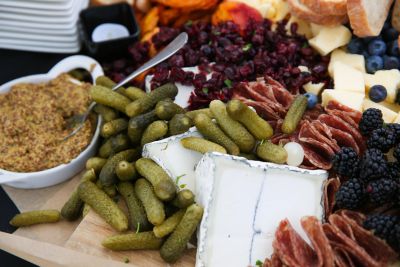
Cornichons: Are they just tiny gherkins?
Some pickles are big. Some pickles are small. And then there are cornichons, the tiny, knobbly little pickles the French like to put next to pâté, cheese and cured meat.
But are les cornichons actually something different? Or are they just tiny gherkins with a French name and a better publicist?
What are cornichons?
Cornichon is the French word for a gherkin or small pickled cucumber. They're small cucumbers picked when they're very young and pickled whole, traditionally in vinegar with herbs and spices. They're generally crisp, sharp and decidedly sour rather than sweet, which puts them in the top right quadrant in the Pickle Universe.
And they really are small. We're talking little finger-sized little pickles, completely the opposite to the torpedoes you sometimes pull from a jar of sours.
So are cornichons just tiny gherkins?
Essentially, yes. But what we think of as a cornichon is also defined by the way it's pickled: whole, tart and typically with very little sweetness.
The difference between a pickle and a gherkin is not always a straightforward explanation; the word gherkin can mean different things depending on where you live.
Besides being tiny, another characteristic of a cornichon is that it's often flavoured with ingredients such as tarragon, mustard seeds and small onions.
Why are cornichons so damn good on a charcuterie board?
This may actually be the cornichon's natural habitat.
Cornichons are traditionally served alongside things like pâté, terrines, cured meats and cheese. The reason is beautifully simple: acid cuts through fat and richness.
Take a mouthful of rich pâté, creamy cheese, aged cheddar, or fatty salami and then bite into a sharp little cornichon. It's one of those food combinations that just works. If you're putting together a board for guests at home, we'd keep it pretty simple:
- Cornichons (Maille's Cornichons are one of our favourites)
- Pâté
- Salami or prosciutto
- Brie or Camembert
- Comté or Gruyère
- Dijon mustard
- Crusty bread or crackers
Cornichons are also excellent with sandwiches, cold meats and anything else rich enough to benefit from a sharp vinegary hit. You can chop them into potato salad, tartare-style sauces or mayonnaise-based dressings.
Small cucumber. Big vinegar hit. Excellent crunch.
And proof, once again, that anything sounds more sophisticated when you say it in French. Even a very small pickle.